 how-to
How to Secure Flexible Credit for Your Business
Table of Contents
- What Flexible Credit Means for Growing Businesses
- Understanding Business Loan Application Requirements
- How to Qualify for Business Financing
- Asset-Backed Lending: Using What You Own
- Accounts Receivable Financing to Bridge Cash Gaps
- Step-by-Step Application Process
- Common Mistakes to Avoid When Applying
- Verification and Credit Bureau Reporting
- Frequently Asked Questions
Last Updated: October 11, 2026
What Flexible Credit Means for Growing Businesses
Secure flexible credit is a broad category that adapts to how you actually borrow, rather than forcing you into a rigid repayment or access structure. The term covers several distinct products, each solving a different timing or cash-flow problem.
For individuals and small-business owners, flexible credit typically means:
- Flexible lines of credit: A pre-approved borrowing limit you can draw from, repay, and redraw as needed. You pay interest only on what you use, not the full approved amount. This is useful when you have unpredictable cash needs but want to avoid multiple loan applications.
- Flexible payment plans: Offered by retailers, service providers, or lenders, these let you split purchases into installments without a fixed loan structure. Some charge interest; others don't if you pay within a promotional window.
- Secured credit cards: A card backed by a cash deposit you hold with the lender. You build credit history by using the card responsibly, and the deposit protects the lender's risk. The deposit-to-credit-limit ratio varies by issuer.
- Buy-now-pay-later (BNPL) services: Newer products that let you split online purchases into interest-free installments, typically due over 4-12 weeks. These are increasingly common but may not report to credit bureaus.
For growth-stage businesses, flexible credit takes different forms:
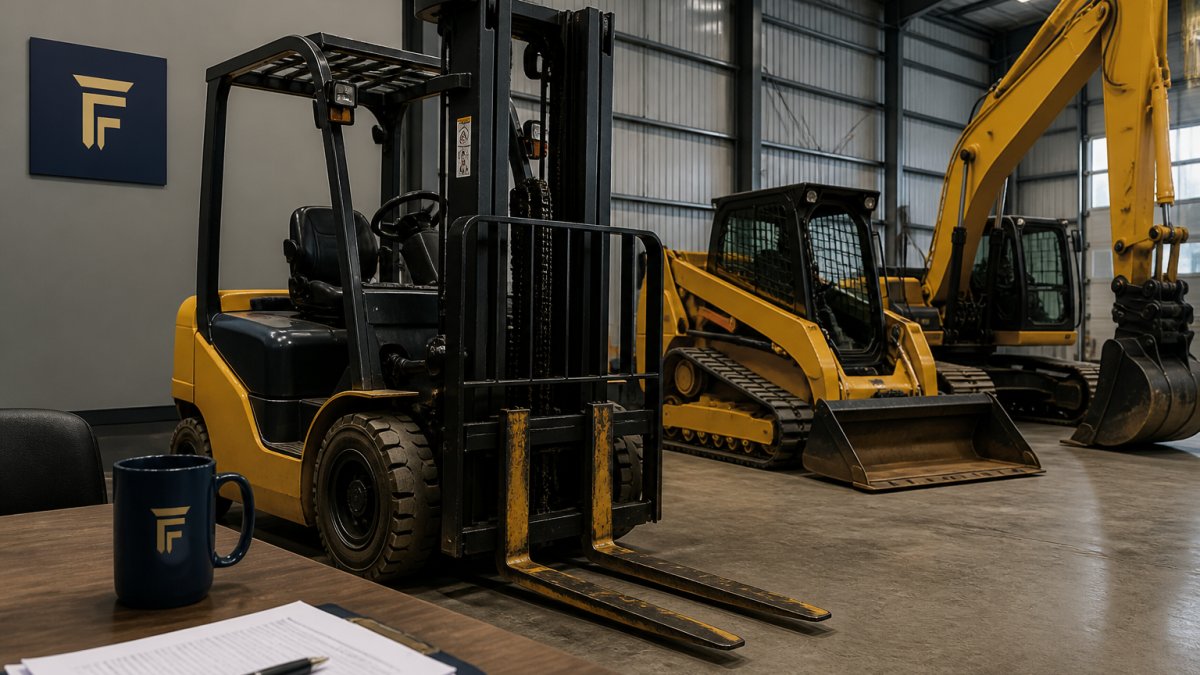
- Asset-backed lending: You borrow against equipment, inventory, or real estate you own, typically accessing 50-80% of the asset's current value.
- Accounts receivable financing: You advance invoices to a lender and receive 75-90% of their face value immediately, repaying when customers pay.
- Flexible business lines of credit: Similar to consumer lines, but sized to your revenue and cash-flow patterns, often with seasonal draw-down and repayment cycles.
The core principle unites all of these: secure flexible credit adapts to your actual cash patterns, payment ability, or asset base rather than forcing you into a predetermined loan structure. Unlike a traditional term loan with a fixed monthly payment, flexible credit lets you borrow what you need, when you need it, and pay it back on terms that match your cash flow.
Understanding Business Loan Application Requirements
When you approach any lender, traditional or private, they're answering one core question: can you repay this? The specifics of how they verify that answer differ dramatically between banks and flexible credit providers.
Traditional banks rely on credit scores, collateral appraisals, and years of tax returns. They need certainty because they hold your loan on their balance sheet for years. Private lenders like Forje Capital take a different approach. We combine credit discipline with operator judgment. That means we look at your business holistically: your team, your customers, your assets, and your ability to execute.
The business loan application requirements vary based on what type of financing you're seeking. Asset-backed lending requires documentation of the assets. Accounts receivable financing needs proof of your invoices and customer quality. Bridge financing for tax credits requires CRA correspondence and project documentation. Each structure demands different evidence.
What unites them: transparency. You'll need to show your financials, explain your business model, and demonstrate why you need this specific capital at this specific time. The application process itself is part of the underwriting, how you present your case tells us how seriously you've thought through your needs.
How to Qualify for Business Financing
Qualifying for business financing depends on which type of flexible credit you're pursuing. The qualification criteria differ, but the underlying principle remains: demonstrate that you have the ability and intention to repay.
Credit History and Personal Guarantees
Your personal credit history matters, but it's not the entire story. Traditional banks treat it as a primary filter, bad credit, automatic rejection. Flexible credit providers weight it differently. A founder with a 650 credit score but $2 million in annual revenue and strong customer retention looks very different than that same score attached to a struggling startup with no revenue.
That said, credit history still signals something important: your track record with debt obligations. Consistent late payments or defaults raise legitimate concerns. Recent damage (within the last 2-3 years) is harder to overcome than older issues. If your credit took a hit during the pandemic or due to a specific business event, be ready to explain it clearly.
Personal guarantees are common in business financing. You're essentially saying, "If my business can't repay this, I will." It's a risk-sharing mechanism lenders use to align incentives. Understand what you're guaranteeing before you sign.
Cash Flow and Financial Statements
Cash flow is the heartbeat of any business. A profitable business that can't access cash when it needs it will fail. Lenders know this. They want to see how money moves through your business: when customer payments arrive, when you need to pay suppliers, where the gaps appear.
Financial statements tell this story. Your profit and loss statement shows revenue and expenses. Your balance sheet shows what you own and owe. Your cash flow statement shows the timing of when money actually moves. For many businesses, these three documents paint very different pictures, and lenders need to see all three.
If you're early-stage without two years of history, be prepared to provide monthly projections with clear assumptions. If you've been operating for years but have inconsistent patterns, document why. Seasonal businesses, project-based work, or companies waiting on large customer payments need to explain their timing explicitly.
Asset-Backed Lending: Using What You Own
Asset-backed lending converts what you own into immediate capital. Equipment, inventory, real estate, intellectual property, if it has value and can be documented, it can potentially back a loan.
The process starts with identification: what assets does your business actually own that could secure financing? For manufacturing companies, that's often equipment. For distributors, it's inventory. For professional services firms, it might be real estate or vehicles. The asset needs to be valuable enough to justify the lending, liquid enough that a lender could recover value if needed, and documented clearly.
The lender then assesses the asset's current value, its depreciation trajectory, and the likelihood of recovery. A piece of manufacturing equipment worth $500,000 today might be worth $350,000 in three years. The lender factors that in when determining how much they'll lend against it. Typically, you can borrow 50-80% of the asset's current market value, depending on the asset type and the lender's risk appetite.
Asset-backed lending is particularly useful when you need capital but your cash flow is strong enough to service the debt. You're not betting your revenue stream on the loan, you're using your balance sheet. It's also faster than traditional bank lending because the collateral is clear and the lender's risk is more straightforward to assess.
Accounts Receivable Financing to Bridge Cash Gaps
Accounts receivable financing solves a specific, common problem: you've done the work, invoiced the client, but haven't been paid yet. Meanwhile, you need to pay your team, your suppliers, and your operating expenses.
This is where accounts receivable financing, sometimes called AR financing or invoice financing, bridges the gap. You provide documentation of your outstanding invoices. The lender advances a percentage of that invoice value immediately, typically 75-90%. When your customer pays the invoice, the lender collects the payment and you pay back the advance plus a fee.
The quality of your invoices matters enormously. A $100,000 invoice from a Fortune 500 company is lower risk than a $100,000 invoice from a startup. The lender will evaluate your customer base, payment history, and the likelihood that invoices will be paid on time. Some industries, consulting, professional services, B2B manufacturing, are well-suited to AR financing because invoices are predictable and customer quality is relatively easy to verify.
AR financing is useful when you have strong revenue but timing gaps. It's also useful when you need working capital but don't want to take on traditional debt. You're not borrowing against your future, you're monetizing work you've already completed.
Step-by-Step Application Process
Applying for flexible credit is straightforward if you're organized and know what to expect. The process typically moves faster than traditional bank lending because private lenders have simpler approval structures, but success depends on preparation.

Step 1: Verify Your Eligibility Before You Apply
Before you spend time gathering documents, confirm that you meet the lender's basic eligibility criteria. This saves wasted effort and prevents unnecessary credit inquiries.
Check these requirements first:
- Age and residency: You must be at least 18 years old and a resident of the province where you're applying. Some lenders require permanent residency or citizenship; others accept temporary residents with valid work permits.
- Credit score range: Ask the lender directly what credit score range they accept. Secured credit cards often accept scores below 600; unsecured lines of credit typically require 650+. If your score is below their minimum, you may not qualify, and a hard inquiry will still appear on your credit report.
- Income or revenue requirement: Lenders set minimum income thresholds. For individuals, this might be $25,000-$40,000 annually. For businesses, it's often $100,000+ in annual revenue. Confirm you meet this before applying.
- Existing debt or credit utilization: Some lenders decline applicants with debt-to-income ratios above 40-50%. If you're carrying high balances on other cards or loans, this may disqualify you.
- Employment or business stability: Traditional lenders want to see 2+ years in your current job or business. If you've recently changed jobs or started a business, some lenders will decline you; others will approve with a co-signer or higher interest rate.
If you don't meet the lender's criteria, ask about alternatives: a co-signer, a secured product instead of unsecured, or a different lender with lower thresholds.
Step 2: Gather Your Documentation
Once you've confirmed eligibility, assemble the documents the lender will request. Standard requirements vary by product type, but most lenders need:
For individuals applying for a line of credit or secured card:
- Government-issued photo ID (driver's license, passport, or provincial ID)
- Proof of income (recent pay stubs, T4s, or notice of assessment from the Canada Revenue Agency)
- Proof of residency (utility bill, lease agreement, or mortgage statement dated within the last 90 days)
- Recent bank statements (typically the last 2-3 months) to verify income deposits and account stability
- List of existing debts and credit accounts (the lender will verify these via credit bureau, but providing a list shows you're organized)
For business owners applying for asset-backed or accounts receivable financing:
- Last two years of financial statements (profit and loss, balance sheet, cash flow statement)
- Recent business bank statements (typically 3-6 months)
- Proof of business ownership (articles of incorporation, partnership agreement, or sole proprietorship registration)
- For asset-backed lending: purchase receipts, current valuations, maintenance records, and proof of ownership for the assets you're pledging
- For accounts receivable financing: sample invoices from the last 30-90 days, customer contracts if available, and evidence of payment history (e.g., bank deposits matching invoice amounts)
- Personal tax returns for the last two years (lenders often require this even for incorporated businesses)
For all applicants:
- A clear description of what you're financing and why (e.g., "$15,000 line of credit to cover seasonal payroll gaps" or "$50,000 asset-backed loan against manufacturing equipment to fund inventory purchase")
Step 3: Organize and Submit Your Application
Create a single folder (digital or physical) with all documents labeled clearly and in chronological order. If there are gaps, unusual items, or explanations needed (e.g., a late payment from three years ago, a spike in expenses, a change in business structure), prepare a brief written explanation to submit with your application.
When you submit, include a cover letter or email that summarizes:
- The product you're applying for and the amount
- Your current credit score (if you know it)
- A one-sentence summary of your financial situation (e.g., "Established business with $500K annual revenue, seeking $30K line of credit for seasonal working capital")
- Your preferred contact method and availability
Submit everything at once rather than trickling documents in over days. Lenders process faster when they have a complete file.
Step 4: Expect Underwriting and Verification
Once the lender receives your application, they will:
- Pull your credit report from Equifax or TransUnion (or both). This is a hard inquiry and will appear on your credit report for up to three years, though it typically has minimal impact on your score if there are no other recent inquiries (Hard Inquiry on Your Credit Report).
- Verify your income by contacting your employer or reviewing your tax returns and bank statements.
- Assess your creditworthiness by reviewing payment history, existing debt, and credit utilization.
- Evaluate your specific request (e.g., for asset-backed lending, they'll assess the collateral; for AR financing, they'll evaluate your customer base).
During this phase, the lender may request clarification or additional documents. Respond quickly, delays here slow down the entire timeline.
Step 5: Receive Your Decision and Terms
Most lenders provide a preliminary decision within 2-5 business days for straightforward applications. If approved, they'll present you with:
- Approved amount: The credit limit or loan size you've been approved for (this may differ from what you requested)
- Interest rate or APR: The annual percentage rate you'll pay on borrowed funds
- Fees: Annual fees, origination fees, prepayment penalties, or other charges
- Repayment terms: For a line of credit, the minimum monthly payment and interest-only vs. principal-and-interest structure; for a loan, the amortization period and payment schedule
- Conditions: Any special terms, such as a requirement to maintain a minimum balance, restrictions on how you can use the funds, or covenants (for business lending)
Review these terms carefully. If anything is unclear, ask for clarification before you sign. Do not sign documents you don't understand.
Step 6: Sign and Fund
Once you've agreed to the terms, you'll sign a promissory note (your promise to repay) and, if applicable, a security agreement (which pledges collateral to the lender). The lender will provide these in plain language; if they don't, ask them to explain any clause you're unsure about.
After you sign, the lender will fund the account. For a line of credit or secured card, this typically happens within 1-3 business days. For a loan, funding may take 2-5 business days depending on the lender's process.
Common Mistakes to Avoid When Applying
Most founders make predictable mistakes when applying for flexible credit. Knowing them in advance helps you avoid them.
The first mistake is incomplete or disorganized documentation. Lenders move fast when they have what they need. If you're missing pieces or your documents are scattered across email and cloud drives, the process slows down. Spend an hour organizing everything before you submit.
The second mistake is misrepresenting your business. If you exaggerate revenue, downplay expenses, or hide customer concentration risk, the lender will find out during underwriting. At that point, trust is broken and the application often dies. Be honest about your business's strengths and weaknesses.
The third mistake is applying without understanding what you actually need. If you're unclear about whether you need asset-backed lending or AR financing, or if you haven't calculated how much capital you actually require, the lender has to help you figure it out. Come in knowing your specific need and how the capital will be deployed.
The fourth mistake is not having a clear repayment plan. How will you repay this loan? From operating cash flow? From the sale of an asset? From a specific customer payment or tax credit? Lenders want to know the mechanics of repayment, not just your confidence that you'll figure it out.
Verification and Credit Bureau Reporting
An important question many founders ask: will this loan appear on my credit report? The answer depends on the lender and the structure.
Some private lenders report to credit bureaus; others don't. This matters because credit bureau reporting helps you build business credit over time. If you're planning to eventually work with traditional banks or need to establish a strong credit profile, reporting is valuable. If you're trying to keep your credit profile clean or avoid triggering certain covenants with existing lenders, non-reporting might be preferable.
Ask the lender directly about their reporting practices before you commit. Some lenders offer both options, reporting and non-reporting structures, with different terms. Understand what you're getting into.
Verification of the loan itself is straightforward. The lender will confirm terms with you in writing before funding. You'll sign a promissory note and security agreement (if collateral is involved). The lender will provide clear documentation of the amount, interest rate, repayment schedule, and any fees. This should all be in plain language, if you don't understand the terms, ask for clarification before signing.
Securing flexible credit requires preparation, honesty, and clarity about your specific business needs. The process is faster and more flexible than traditional banking, but it still demands that you understand your financials, organize your documentation, and communicate clearly about your situation.
At Forje Capital, we work with growth-stage Canadian businesses that need capital structured around how they actually operate. Whether you're bridging a gap in accounts receivable, using equipment you own, or financing a tax credit, we provide direct access to decision-makers and underwriting based on operator judgment rather than rigid credit scores. Apply Now
Frequently Asked Questions
What documents do I need to apply for flexible business credit?
Most lenders require recent financial statements (balance sheet and income statement), tax returns for the last two years, business bank statements, proof of business ownership, and a detailed description of how you'll use the credit. For asset-backed lending, you'll also need documentation of the assets securing the loan. For accounts receivable financing, provide customer invoices and aging reports. Exact requirements vary by lender, so confirm the full list before starting your application.
How quickly can a business get approved for flexible credit?
Approval timelines depend on the lender and loan type. Private lenders typically move faster than traditional banks, with decisions ranging from days to a few weeks. Asset-backed and accounts receivable financing often have quicker turnarounds because they're secured by specific business assets. The speed also depends on how organized your documentation is and how straightforward your application is. Direct access to decision-makers can accelerate the process significantly.
How do lenders assess a business for flexible credit?
Lenders evaluate your business based on cash flow, credit history, collateral or assets, industry stability, and management experience. For flexible credit, many lenders focus on your business's ability to generate revenue and repay, rather than strict credit score requirements alone. They assess the value and stability of assets you're offering as security, and review your payment history with existing vendors and lenders. This operator-focused approach is more adaptable than traditional banking criteria.
What makes flexible credit different from a traditional bank loan?
Flexible credit is structured around your business's specific needs and assets rather than one-size-fits-all products. It adapts to your cash flow timing, allows asset-backed or revenue-based structures, and often involves faster decision-making with direct access to lenders. Terms can be customized for growth-stage companies, restructuring situations, or timing gaps in revenue collection. Traditional banks typically require extensive credit history, rigid underwriting, and longer approval processes.