 How-to
How to Value Equipment Collateral for a Bridge Loan
Last Updated: November 4, 2026
Quick Summary
Equipment collateral valuation is the process lenders use to estimate what your machinery or vehicles would sell for if the loan defaulted, which sets the maximum you can borrow. Lenders usually value equipment at orderly liquidation value, then apply an advance rate, and deduct prior liens and fees from the result.
- Lenders value equipment by resale price, not the original purchase price.
- Gather bills of sale, serial numbers, and a list of existing liens before the appraisal starts.
- Orderly liquidation value is common for bridge loans and is typically lower than fair market value.
- Loan amount equals collateral value multiplied by the lender's advance rate.
- Prior liens and origination, appraisal, and legal fees reduce the net advance you receive.
Table of Contents
- What Equipment Collateral Valuation Means for a Bridge Loan
- Step 1: Gather the Documents Needed for Equipment Financing
- Step 2: Identify the Right Valuation Basis (Fair Market vs. Liquidation Value)
- Step 3: Understand the Equipment Appraisal for Financing
- Step 4: Adjust Value for Age, Hours, and Condition
- Step 5: Apply the Equipment Loan-to-Value Ratio
- Worked Example: From Appraised Value to Bridge Loan Advance
- How the Equipment Bridge Loan Funding Timeline Follows Valuation
- Next Step: Get Your Equipment Valued With Forje Capital
- Frequently Asked Questions
What Equipment Collateral Valuation Means for a Bridge Loan
Equipment collateral valuation is the process lenders use to decide how much a piece of machinery, a vehicle or a production line is worth as security for a loan. For a bridge loan, that number sets the ceiling on what you can borrow. The logic behind it is more predictable than most people expect.
A bridge loan is short-term financing that covers a timing gap, such as waiting on a tax refund or a large receivable. When the loan is secured by equipment, the lender cares most about one question: if the loan defaults, what could be sold to recover the money? Collateral valuation answers that question in dollar terms.
Many business owners assume their equipment is worth what they paid for it. That is rarely how lenders see it. Lenders focus on resale value, the price a buyer would actually pay for the asset today.
This guide walks through the full valuation process in order. It covers documents, valuation basis, appraisals, adjustments for age and condition, the loan-to-value calculation and the funding timeline.
Step 1: Gather the Documents Needed for Equipment Financing
Before any valuation starts, the lender needs proof that you own the asset and that it can be pledged.
Most lenders will ask for:
- Ownership documentation: bills of sale, purchase agreements or title certificates
- Serial numbers and model details for each asset
- Equipment inventory list showing make, model, year and location
- Existing liens: a list of any current loans or lease obligations on the same assets
- Recent maintenance records that show how the equipment has been used and cared for
- Photos of each asset from several angles
Existing liens matter most. If another lender already holds a claim on the equipment, the new lender will sit behind it in lien priority. That reduces the value available to them, so the lien details must be accurate from the start.
Watch out: Missing or mismatched serial numbers are one of the most common reasons a valuation gets delayed. Check every number against the physical asset before you submit.
Step 2: Identify the Right Valuation Basis (Fair Market vs. Liquidation Value)
Two valuation bases come up most often, and they produce very different numbers. The basis the appraiser selects, and the lender accepts, depends on the equipment type, how liquid its resale market is, and how the lender expects to recover value if the loan defaults.
Fair market value is the price a willing buyer would pay a willing seller, with neither under pressure to act. It assumes the equipment can be marketed in a normal way over a reasonable period, typically several months. Fair market value is most useful for equipment with an active resale market and predictable pricing, such as late-model trucks, standard construction machines, and common agricultural equipment.
Orderly liquidation value assumes the equipment must be sold within a set window, often 60 to 90 days, but with enough time to find buyers and market the assets. It is lower than fair market value because the seller is under time pressure. Lenders often prefer orderly liquidation value for bridge loans because it reflects a realistic recovery if they had to act on the security. For how asset-backed lending is secured by equipment and other business assets, see flexible lending secured by business assets.
Forced liquidation value assumes a quick sale with little or no marketing, often at auction within 30 days. It is usually the lowest figure and is used when the lender wants a conservative floor or when the equipment is specialized and slow to sell.
Replacement value is the cost to acquire an equivalent asset new or used. It is less common in bridge lending because it does not reflect what the lender could recover on resale, but it can appear in insurance contexts or when the borrower is refinancing recently purchased equipment.
Which basis applies to which equipment type is where the practical difference shows up:
- Standard construction equipment (excavators, loaders, dozers) usually has an active auction and dealer market, so orderly liquidation value is common and advance rates can be higher.
- Vehicles and trailers have well-established resale channels, making orderly liquidation value relatively predictable.
- Specialized or custom machinery (production lines, medical devices, niche agricultural equipment) may have a thin buyer pool, so lenders often apply forced liquidation value or a deeper discount to orderly liquidation value.
- Technology-heavy equipment can lose value quickly through obsolescence, so appraisers may weight recent comparable sales more heavily and lenders may shorten the assumed marketing window.
Ask which basis the lender uses before the appraisal begins. Knowing this helps you predict the final number and understand why two appraisers can reach different conclusions on the same asset. A common pattern is for the appraisal to state fair market value while the lender applies an orderly liquidation discount before setting the borrowing base, so the number you see on the report is not always the number the lender lends against.
Step 3: Understand the Equipment Appraisal for Financing
An equipment appraisal is a formal, written opinion of value prepared by a qualified appraiser. Lenders rely on it because it is independent of the borrower.
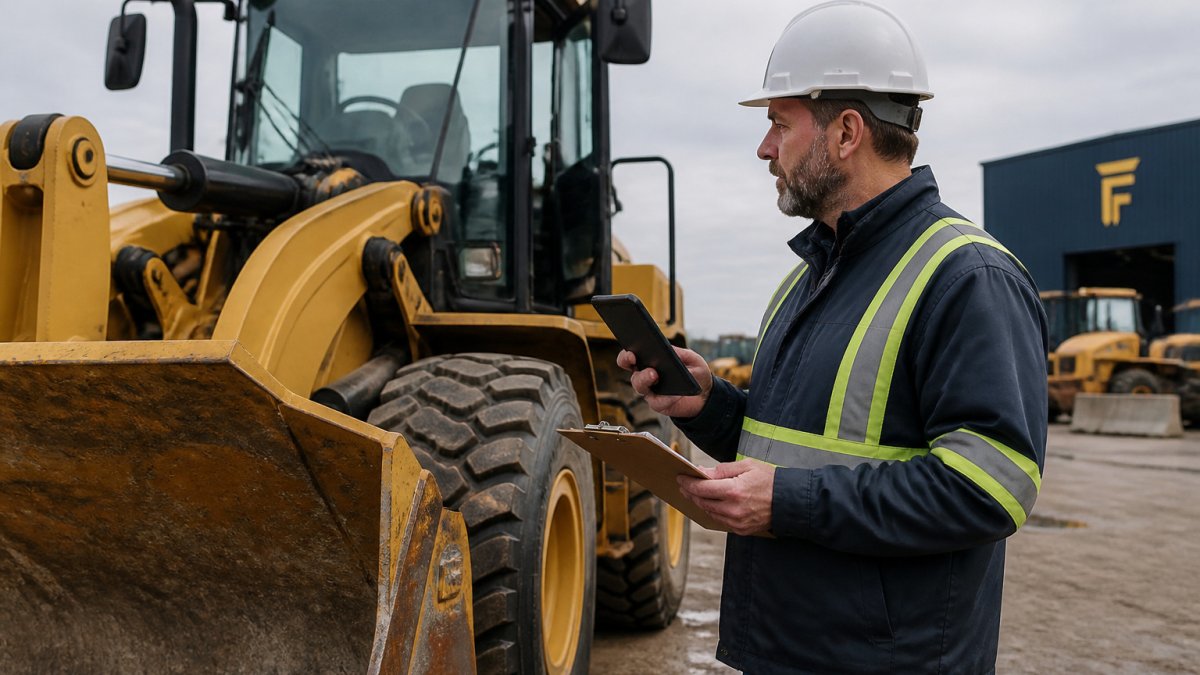
A typical appraisal includes:
- Physical inspection of each asset
- Verification of serial numbers and ownership
- Review of the asset's age, hours and condition
- Research into comparable sales of similar equipment
- A stated valuation basis and a final value for each asset
Appraisers compare your equipment against recent sales of similar machines. Their notes often explain why a given asset is worth more or less than its listing price elsewhere.
!A certified equipment appraiser in a hard hat and work jacket inspecting heavy machinery at a Canadian industrial yard, with a clipboard and tablet in hand
Appraisal cost and timeline
Appraisal cost depends on the number and type of assets, their location and the level of detail the lender requires. Costs and turnaround times vary by appraiser and region, so ask for a written quote before booking.
Step 4: Adjust Value for Age, Hours, and Condition
Two identical machines can have very different values. Lenders adjust the base figure for factors that affect how quickly the asset loses value and how easily it sells.
Key adjustments include:
- Age: Older equipment usually sells for less, and the drop is often steepest in the early years.
- Hours or usage: For machinery and vehicles, higher hours typically lower the value.
- Condition: Visible wear, rust, leaks or missing parts reduce the figure.
- Maintenance history: Complete service records can support a higher value.
- Market demand: Some equipment types are easier to resell than others.
A common mistake is assuming that good maintenance always raises value. Well-kept records help, but a machine with high hours can still be discounted heavily. Accurate, honest records give appraisers the most to work with.
Step 5: Apply the Equipment Loan-to-Value Ratio
The loan-to-value ratio, or LTV, expresses the loan as a percentage of collateral value. Lenders set maximum LTVs based on the asset type, its liquidity and the risk they see.
The basic formula is:
Loan amount = Collateral value × Advance rate
The advance rate is the percentage of the collateral value the lender will lend against. Advance rates for equipment vary widely, so confirm the rate with the lender rather than relying on a general figure.
Worked Example: From Appraised Value to Bridge Loan Advance
Consider a hypothetical business that pledges two assets to a bridge lender. The figures below are illustrative only.
| Asset | Appraised Value (orderly liquidation) | Advance Rate | Gross Lendable Amount |
|---|---|---|---|
| Excavator, 2018 model | $180,000 CAD | 60% | $108,000 CAD |
| Delivery truck, 2020 model | $65,000 CAD | 60% | $39,000 CAD |
| Total | $245,000 CAD | $147,000 CAD |
The gross lendable amount is $147,000 CAD. But that is not what the borrower receives. Two adjustments commonly reduce the net advance: existing liens and loan fees.
Existing liens. Suppose the delivery truck still has $20,000 CAD outstanding on a prior equipment loan. The new lender sits behind that lien in priority, so it will typically subtract the prior lien from the lendable amount on that asset. The truck's contribution drops from $39,000 CAD to $19,000 CAD, and the total gross lendable amount falls to $127,000 CAD.
Fees and holdbacks. Bridge lenders may charge an origination fee, appraisal reimbursement, and legal costs. A common pattern is for these to be deducted from the advance at funding rather than paid upfront. If fees total $4,000 CAD, the net advance before interest is approximately $123,000 CAD.
| Line item | Amount |
|---|---|
| Gross lendable amount (after advance rates) | $147,000 CAD |
| Less: prior lien on delivery truck | −$20,000 CAD |
| Less: origination, appraisal, and legal fees | −$4,000 CAD |
| Estimated net advance | $123,000 CAD |
This is the figure to plan around. Interest accrues on the outstanding balance, and the repayment schedule determines how much principal remains at payoff. If the advance rate for one asset class were lower, say 50% for the specialized equipment, the total would fall accordingly. Actual rates, values, and fee structures depend on the lender and the appraisal; contact Forje Capital for current pricing or a quote.
Watch out: borrowers often compare the appraised value to the net advance and conclude the lender was overly conservative. In most cases the gap is explained by the valuation basis, the advance rate, prior liens, and fees, each of which should be itemized in the lender's term sheet or commitment letter before funding.
How the Equipment Bridge Loan Funding Timeline Follows Valuation
Funding usually comes after the valuation is complete, not before. The general sequence runs from document collection to appraisal, then to lender review, and finally to funding.
Forje Capital offers direct access to decision-makers, which the team can discuss during your application. For a clear view of each stage, review the step-by-step process from first conversation to funded before you start.
Plan your timing gap with the valuation timeline in mind. If your tax refund or receivable is due in a few weeks, starting the document and appraisal steps early keeps the bridge loan on track.
Next Step: Get Your Equipment Valued With Forje Capital
If you own equipment and need short-term capital, the valuation is the first step toward a loan you can plan around. Forje Capital reviews asset-backed requests with operator judgment. To explore the bridge loan product directly, see the short-term capital for timing-sensitive situations option, or compare the equipment acquisition financing that preserves working capital.
Frequently Asked Questions
How do lenders value equipment used as collateral for a bridge loan?
Lenders typically start with an appraisal that estimates what the equipment would sell for under the valuation basis they use, often fair market value or a more conservative liquidation value. The appraiser reviews make, model, year, serial number, hours of use, condition, and comparable recent sales. Lenders then apply an advance rate to that figure to set the loan amount. Exact fees and turnaround times vary by appraiser and lender, so confirm current pricing directly with Forje Capital or your appraiser before committing to a timeline.
What types of equipment can secure a bridge loan?
Many lenders accept construction and mining equipment, manufacturing machinery, trucks and trailers, agricultural equipment, and commercial vehicles, provided they have a resale market and clear ownership. Specialized or highly customized equipment can be harder to finance because fewer buyers exist, which usually lowers the value a lender will assign. Ownership documentation, a serial number, and freedom from existing liens strengthen the application.
What documents are needed for equipment financing against a bridge loan?
Most lenders ask for bills of sale or purchase invoices, the equipment serial number and model details, proof of ownership or title, a list of existing liens, recent maintenance or hour-meter records, and photos showing condition. For a bridge loan, you may also need the financing or tax credit documentation that the bridge is meant to cover. Gathering these early shortens both the appraisal and the funding timeline, so start with a complete equipment inventory.
How quickly can equipment collateral be valued for a bridge loan?
Timelines depend on the equipment type, its location, and how quickly the appraiser can inspect it and pull comparable sales. Simple, widely traded equipment can often be valued within days once documents are complete, while specialized assets may take longer. Forje Capital can confirm its current process and turnaround for your specific equipment when you apply.
Ready to move forward? Have a financing need? Let's review it. Tell us about your equipment and timing, and we will respond quickly with next steps.