 listicle
9 Common Reasons Your SR&ED Claim Gets Rejected
Quick Summary
The most common reasons for sr&ed claim rejection are work that fails the technological uncertainty test, routine development presented as experimental, weak or after-the-fact documentation, ineligible expenses, and poor time allocation. Most of these trace back to records that do not show the systematic investigation actually took place.
- Describe the specific unanswered technical question in measurable terms, not just as an innovative project.
- Separate routine development, such as standard quality control or client customization, from genuinely experimental work.
- Keep dated, contemporaneous logs showing hypothesis, experiment, results and decision.
- Remove marketing, sales and general administrative costs before submitting the cost schedule.
- Use project-tied timesheets applied consistently rather than undocumented 100% salary claims.
Table of Contents
- How CRA Reviews an SR&ED Claim and Where Rejections Start
- 1. Work That Does Not Meet the Technological Uncertainty Test
- 2. Routine Development Mistaken for Experimental Work
- 3. Missing or Weak Project Documentation
- 4. Ineligible Expenses Claimed as Qualifying Costs
- 5. Poor Allocation of Employee Time and Overhead
- 6. Overlooking Staff Who Performed Eligible Work
- 7. Technical Narratives That Do Not Explain the Work
- 8. How to Appeal a CRA SR&ED Denial and What Happens Next
- Reducing Your Risk Before You File Your Next SR&ED Claim
- Frequently Asked Questions
How CRA Reviews an SR&ED Claim and Where Rejections Start
Last Updated: November 1, 2026
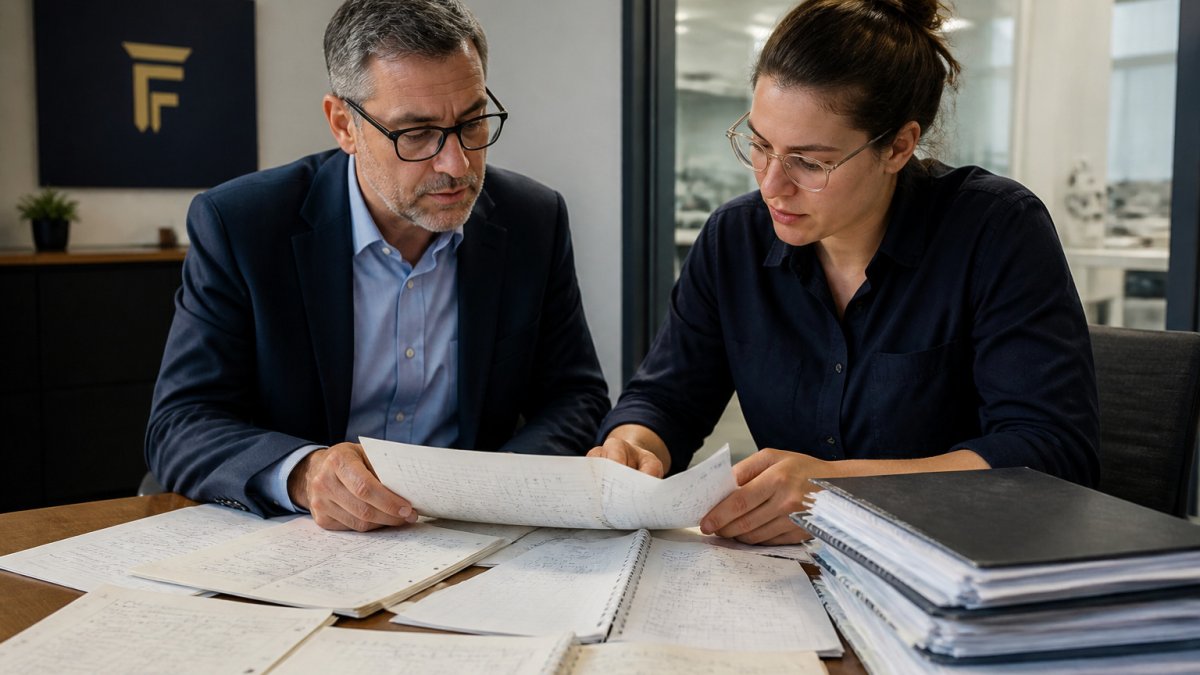
Most SR&ED claims that get rejected were never really in trouble at the start. The problems tend to build up quietly, through a few predictable mistakes that Canada Revenue Agency (CRA) reviewers see again and again. Knowing where those mistakes happen is the fastest way to protect your common reasons for SR&ED claim rejection exposure.
A claim is evaluated in layers. A technical reviewer first asks whether the work meets the program's definition of experimental development. A financial reviewer then checks whether the costs claimed are eligible and properly allocated. If either layer finds gaps, the claim can be denied outright or reduced, and the time spent on the dispute can stretch for months. You can review the official program rules directly through Canada Revenue Agency SR&ED program guidance.
Rejections usually start in one of three places: the technical narrative, the supporting records, or the cost schedule. Weakness in any one of these can unravel the others, which is why the sections below walk through each risk in order.
The table below summarises the main rejection risks and their fixes, drawn from the sections above.
| Risk | Cause | Fix |
|---|---|---|
| Technological uncertainty not met | Problem solvable with known methods | State the specific unanswered question in measurable terms |
| Routine work claimed as SR&ED | Standard QC, client customization or market research included | Separate routine development from experimental work |
| Weak documentation | Records lack hypothesis, method, results and decision | Keep dated, contemporaneous logs and revisions |
| Ineligible expenses | Marketing, sales or general admin costs included | Check each line against program expense rules |
| Poor time allocation | Undocumented or uniform 100% salary claims | Use project-tied timesheets applied consistently |
| Overlooked staff | Supervisors or senior staff who did eligible work omitted | Map everyone who worked on the technical problem |
| Narrative lacks explanation | Activities listed without explaining why they were needed | Explain objective, uncertainty, experiments and results |
1. Work That Does Not Meet the Technological Uncertainty Test
The core question in any SR&ED claim is whether the project faced a technological uncertainty that could not be resolved with routine knowledge. Many claims fail because the company solved a problem it already knew how to solve. Reviewers look for a genuine gap in the state of knowledge, not just a difficult build.
A useful test is to ask whether a competent professional in the field could have predicted the outcome in advance. If the answer is yes, the work is likely routine. Strong claims describe the specific question the team could not answer and the systematic investigation used to find out.
Watch out: describing the project as "innovative" or "new to us" is not enough. Reviewers want the technical uncertainty stated in plain terms, tied to a measurable objective.
2. Routine Development Mistaken for Experimental Work
Routine development uses established methods to build something with a known outcome. It is one of the most common reasons claims fall apart on review. Companies often include standard quality control, customization for a client, or market research under the SR&ED banner, and reviewers strip those activities out.
Consider two examples. A team tuning an existing manufacturing line to a known specification is doing routine work. A team testing whether a new sensor design can hold accuracy under conditions no one has previously validated is doing experimental work. The difference is whether the answer was knowable before the work began.
Keeping routine development and experimental work separate in your claim is essential.
3. Missing or Weak Project Documentation
Documentation is where many claims are won or lost. A claim can describe genuinely experimental work and still fail because the records do not show it happened. Reviewers expect contemporaneous evidence: lab notebooks, test logs, design revisions, meeting notes, and the reasoning behind each change. Documentation created after the fact, or reconstructed months later for the claim, is viewed with skepticism. Records should show the hypothesis, the experiment, the results, and the decision that followed.
The gap most claimants fall into is not a total absence of records but records that are too thin to prove the technical work occurred. Reviewers are not looking for polished reports; they are looking for evidence that a systematic investigation actually took place during the project. The difference between weak and strong evidence is usually specificity, not volume.
Weak versus strong evidence: concrete examples
Consider a software team that claims it resolved a technological uncertainty in a data-processing pipeline. A weak record entry might read: "Tested new approach. It worked better. Proceeded with implementation." That entry names no hypothesis, no alternative, no measurement, and no reason the outcome was uncertain. A reviewer cannot tell whether the team resolved a genuine technical unknown or simply made a routine design choice.
A strong entry for the same work would read: "Hypothesis: batch size above 500 records causes memory exhaustion under peak load because the existing buffer strategy does not release references between batches. Experiment: ran three configurations (250, 500, 1,000 records per batch) against a production-scale dataset over 48 hours. Result: 1,000-record batches failed at hour 6 with out-of-memory errors; 500-record batches passed but showed 40% latency degradation; 250-record batches passed with acceptable latency. Decision: adopted 250-record batches and documented the trade-off for future scaling work." That entry shows the uncertainty, the systematic method, the measured outcomes, and the decision, the four elements a reviewer needs.
What reviewers look for in each record type
- Lab notebooks and experiment logs: dated entries showing what was tried, what was expected, and what actually happened. Undated or retrospectively compiled logs carry little weight.
- Design revisions and version history: commit messages, change logs, or drawing revisions that show the technical problem being worked through, not just the final output.
- Meeting notes and decision records: evidence that the team identified an uncertainty and chose a path to resolve it, including alternatives considered and rejected.
- Test results and measurements: raw data, screenshots, or instrument readings that can be tied to a specific experiment and date.
A common pattern is for companies to have strong engineering records but weak claim-facing records. The engineering team knows what happened, but the file does not connect the records to the SR&ED criteria. The fix is to write the technical narrative from the contemporaneous records, not the other way around. If the records do not support a statement in the narrative, remove the statement rather than risk the reviewer finding the gap.
Bridging a pending refund can ease the pressure of a long review, but it does not replace the records that protect the claim itself. For a closer look at how SR&ED financing for software companies can bridge the gap during an appeal, see that guide. For more on this, see our guide on bridging SR&ED tax credit refunds. For a deeper look at evidence standards, review SR&ED documentation best practices.
4. Ineligible Expenses Claimed as Qualifying Costs
Not every dollar spent on a project qualifies. Marketing, sales promotion, and general administrative costs are generally excluded, yet they often appear in claims because they were tracked to the same project. Reviewers catch these quickly, and once one ineligible item is found, the rest of the cost schedule gets scrutinized.
Review each line item against the program's expense rules before submission, and remove anything that does not directly support the experimental work.
5. Poor Allocation of Employee Time and Overhead
Salary claims depend on how accurately employee time is allocated to eligible work. Claims that assign a full salary to SR&ED without time records, or that spread time evenly across projects with no basis, are easy targets for reviewers. Overhead allocations face the same scrutiny when the method is arbitrary or undocumented. A simple, consistent timesheet system tied to specific projects, applied the same way every year, is far easier to defend than a reconstructed estimate.
The rejection risk here is not usually that the work was ineligible. It is that the calculation cannot be traced back to evidence. Reviewers reduce claims when the allocation method is undocumented, when the same employee's time is claimed at 100% across multiple projects, or when contractor and overhead costs are bundled without a clear basis.
Labor allocation: the three methods and their risks
Most claims use one of three approaches to allocate employee time. Each has a different risk profile on review.
- Timesheet-based allocation: employees record hours against specific projects. This is the strongest method because it produces contemporaneous evidence. The risk is incomplete timesheets, if an employee records only SR&ED hours and not total hours, the reviewer cannot verify the proportion claimed.
- Percentage-of-time estimates: the claimant estimates what share of an employee's time went to eligible work. This is acceptable if the estimate is reasonable and documented, but it is vulnerable when the percentage is high, uniform across staff, or unsupported by any project records.
- Retrospective reconstruction: time is estimated after the project ends, often from calendars or memory. This is the weakest method and the most likely to draw a reduction. If reconstruction is the only option, document the basis for the estimate and keep it conservative.
A common error is claiming a full salary for a technical lead who also manages operations, sales, or administration. Reviewers expect a reasonable split, and an undocumented 100% claim invites a full reduction of that person's costs. The same applies to owners and senior staff whose time is difficult to separate from general management.
Contractor costs: what qualifies and what does not
Contractor costs are eligible only when the contractor is resident in Canada, deals at arm's length with the claimant, and performs eligible SR&ED work. Payments to non-residents are generally not eligible, and payments to related parties face additional restrictions. Claims often fail because the contractor's invoice describes the work in general terms ("development services") without tying it to the experimental work. Ask contractors to provide invoices or supporting documentation that identify the technical work performed, and keep the contract on file.
Overhead and other costs: calculation errors that trigger reductions
Overhead is typically claimed through a prescribed proxy method rather than by tracking every indirect cost. The most common errors are applying the proxy to costs that are not eligible, including administrative or marketing salaries in the base, or using an inconsistent method from year to year. Reviewers also look closely at materials and consumables: only the portion consumed or transformed in the experimental work is eligible, not equipment purchased for general use.
A simple, consistent timesheet system tied to specific projects, applied the same way every year, is far easier to defend than a reconstructed estimate. If your claim is already under review and cash flow is tight while the file is resolved, SR&ED financing can bridge the gap without changing the underlying claim.
6. Overlooking Staff Who Performed Eligible Work
Claims sometimes leave out people who did qualifying work, which can understate the claim and weaken its credibility. Technical staff are usually obvious, but production supervisors who resolve technical challenges on the shop floor, or senior staff who set the experimental direction, are often overlooked.
Map every person who worked on the technical problem, not only the people whose titles sound technical.
7. Technical Narratives That Do Not Explain the Work
The technical narrative is the written story of the project. It should explain the objective, the uncertainty, the experiments performed, the results, and the conclusions. A narrative that lists activities without explaining why they were needed gives the reviewer nothing to assess.
Strong narratives are specific. They name the technical challenge, describe the alternatives tested, and explain why earlier approaches failed. A clear narrative is the front line of documentation that supports a claim.
8. How to Appeal a CRA SR&ED Denial and What Happens Next
When a claim is denied, the first step is to read the CRA's stated reasons carefully. Distinguish between a full denial and a partial adjustment, because each calls for a different response. An adjustment may be resolved with supporting evidence, while a denial usually requires a formal objection.
The objection process begins with a written notice of objection filed within the statutory deadline. Gather the strongest contemporaneous records, correct the technical narrative, and address each stated reason directly. An objection can be reviewed by an independent appeals officer, which is a route for disputes that cannot be settled at the audit level.
Appeals take time, and cash flow often suffers while they are pending. Some companies compare SR&ED loans without collateral to keep operations running while the dispute is resolved. Some companies use financing against pending credits to cover payroll and operations during that period. For a closer look at this option, read about SR&ED financing for software companies and SR&ED loans without collateral.
Reducing Your Risk Before You File Your Next SR&ED Claim
The most effective way to avoid rejection is to treat the claim as a record kept throughout the project, not a form completed at year-end. Set up time tracking tied to projects, keep experimental logs current, and review each cost against eligibility rules before submission. Reviewing your claim against these nine risks before filing will catch most problems early.
If your claim is already under review and you need capital while it is resolved, you can learn about bridge financing options for pending SR&ED tax credits.
Frequently Asked Questions
What happens if my SR&ED claim is denied?
A denied SR&ED claim means the CRA has determined the work or expenses do not meet program requirements, so the associated tax credits are not granted. Denials are not always final. In many cases the CRA issues a notice of assessment or a request for information first, and the claimant can respond with additional evidence. If the decision stands, the claimant can file a notice of objection with the CRA within the deadline stated on the notice, and then escalate to the Tax Court of Canada if needed. Acting quickly and keeping the original records intact protects every option.
What documentation is required to support an SR&ED claim?
Strong SR&ED claims rely on contemporaneous records created while the work happens. These include project objectives, the technological uncertainty being addressed, hypotheses, test plans, experiment results, engineering notebooks, meeting minutes, design revisions, and timesheets that link staff to specific projects. Records should show the systematic investigation, not just the final outcome. Retrospective summaries written months later are weaker evidence. Keep documentation organized by project so reviewers can trace each eligible activity to its supporting expenses.
How does the CRA define technical uncertainty for SR&ED?
Technological uncertainty exists when the outcome of the work cannot be determined in advance using established technology or known methods. The uncertainty must be about how to achieve a technological advancement, not simply a business question or a routine adjustment. Claimants should be able to state the specific technical problem, explain why standard practice could not resolve it, and show the experiments or analysis used to address it. Projects that fail can still qualify if the uncertainty and systematic investigation are documented.
Can I appeal an SR&ED claim rejection?
Yes. A taxpayer who disagrees with an SR&ED determination can file a notice of objection with the CRA within the deadline shown on the notice of assessment or reassessment. The objection should address each reason for the reduction or denial with specific evidence. If the objection is not resolved, the taxpayer can appeal to the Tax Court of Canada. Timelines are strict, so confirm the exact deadlines on your notice and act promptly. Working with an advisor who has handled SR&ED reviews can help structure the response.